
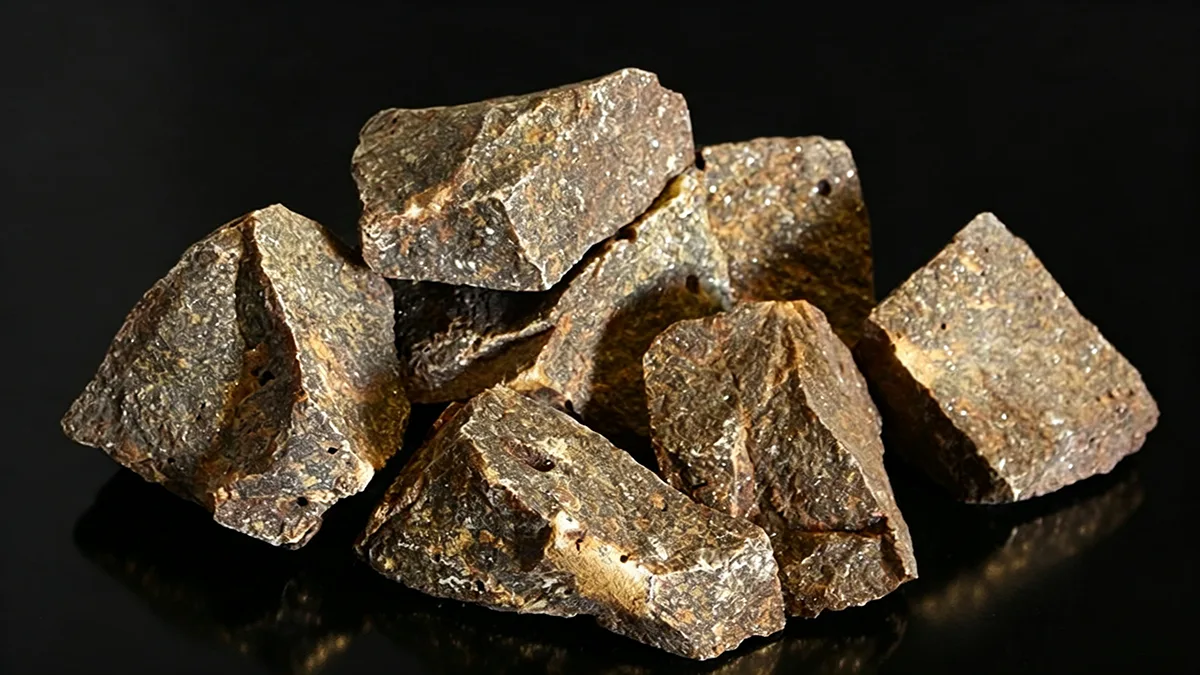
What is Fused Magnesia? Production Process & Core Physical Properties

Fused magnesia (electric fused magnesia) is a high-performance magnesia refractory raw material produced by ultra-high temperature electric melting.
Compared with sintered magnesia, it features larger crystal grains, higher density, lower porosity and stronger slag resistance, and is widely used in steel ladle lining,
MgO-C bricks, glass furnaces and high-temperature industrial kilns.
1.What is Fused Magnesia?
Fused magnesia takes high-grade magnesite or light-burned magnesia as raw materials. After melting in an electric arc furnace above 2800°C, the material completes liquid-phase recrystallization.
Impurities are fully separated during high-temperature melting, forming dense and stable periclase crystal structure.
Thanks to its unique fused crystalline structure, fused magnesia performs far better than ordinary sintered magnesia in anti-corrosion, thermal shock resistance and high-temperature stability,
making it the preferred raw material for harsh high-temperature working conditions.
2.Fused Magnesia Production Process
The production process directly determines the final refractory performance:
1). Raw material selection & batching
Strictly select high-purity magnesia raw materials and control harmful impurities such as silica and iron oxide.
2). Electric arc furnace melting
Raw materials are fully melted at 2800°C–3000°C to remove low-melting impurities and achieve purification.
3). Slow cooling and recrystallization
Slow cooling promotes the growth of large, uniform and compact magnesia crystals, which is the core step for high density and low porosity.
4). Sorting, crushing and screening
Qualified fused magnesia ingots are sorted, crushed and graded into standard particle sizes for refractory batching.
5). Inspection and export packaging
Each batch is tested with complete physical and chemical reports to ensure stable quality for overseas delivery.
3.Core Physical and Chemical Indicators
The core indexes define fused magnesia quality and application scenarios:
- MgO Purity (96%–99%)
Higher purity means fewer low-melting impurities, supporting higher temperature resistance and slag corrosion resistance.
High-purity grades (98%–99%) are used for steel slag lines and high-end refractory products. - Bulk Density (≥3.40 g/cm³)
High density ensures compact internal structure, effectively resists molten steel and slag penetration, and extends furnace lining service life. - Low Apparent Porosity
Low porosity reduces channel penetration of high-temperature gas and slag, avoiding refractory peeling and damage. - Large Crystal Structure
Large complete grains provide excellent thermal shock stability and low high-temperature creep, suitable for frequent heating and cooling working conditions.
Fused magnesia’s excellent performance comes from high-temperature melting recrystallization and stable physical indicators. It is an indispensable core raw material for modern high-temperature metallurgy, glass and cement refractory industries.
We supply full grades of fused magnesia with stable quality, complete test certificates and customizable particle sizes. Free samples are available for your quality testing.
Fused magnesia resists molten slag penetration to extend refractory brick service life in steel fumaces