
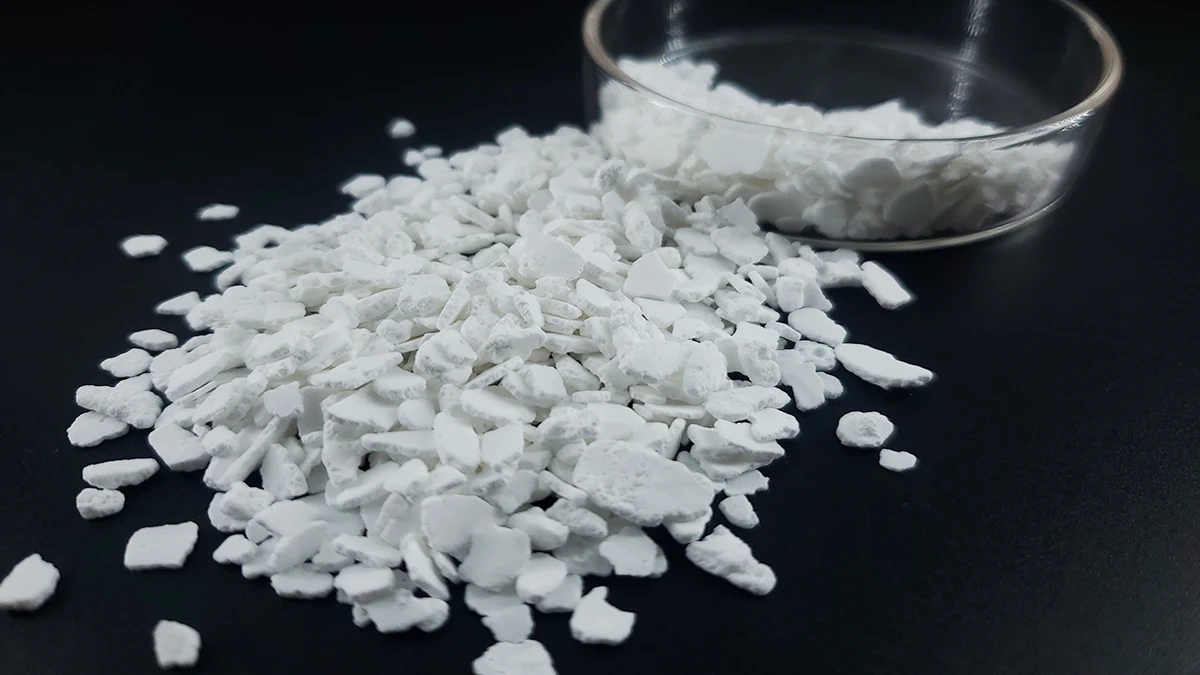
Flake, Pellet & Powder 74% Calcium Chloride Dihydrate Difference Comparison

74% dihydrate calcium chloride is one of the most widely used industrial CaCl₂ products, commonly supplied in three physical forms: flake, pellet and powder.
They share identical chemical purity (74% CaCl₂ content) and core chemical properties, but differ greatly in particle shape, dissolution speed, caking tendency,
transportation convenience and applicable scenarios. This article makes a concise comparison for buyers to pick the right form quickly.
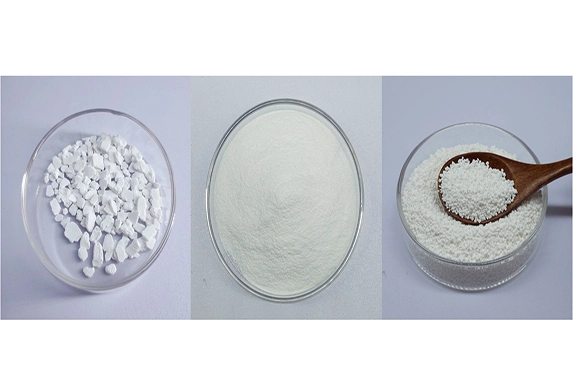
Basic Physical Feature Contrast
Flake calcium chloride dihydrate
- Appearance: Irregular thin flakes, sheet-shaped fragments
- Dissolution rate: Medium speed; dissolves steadily without local overheating
- Caking risk: Moderate; flakes stack loosely, less compacted during long-distance sea shipping
- Typical packaging: 25kg woven bag, jumbo bag
Pellet calcium chloride dihydrate
- Appearance: Spherical small pellets with uniform particle size
- Dissolution rate: Slow and uniform, easy to control dosing speed
- Caking risk: Lowest among three forms; round particles have small contact area, not easy to agglomerate
- Advantage: Good flowability, automatic feeding equipment works perfectly
Powder calcium chloride dihydrate
- Appearance: Fine white powder with large specific surface area
- Dissolution rate: Extremely fast, rapid heat release once contacting water
- Caking risk: Highest; fine powder absorbs moisture rapidly and tends to harden into blocks
- Shortcoming: Easy to produce dust during unloading and feeding
- Application Scenario Matching
Flake
Best for road deicing, highway snow melting, wastewater treatment and concrete antifreeze. It balances cost and usability, the most cost-effective bulk export choice for general industrial projects.
Pellet
Ideal for circulating fluid desiccant, refrigeration brine system, oil and gas drilling fluid. Its great fluidity supports automated continuous feeding, widely adopted by large-scale factory fixed pipelines.
Powder
Suitable for precise formula blending, small-batch reagent preparation and rapid moisture absorption in closed containers. Dust limits its large-scale bulk transportation; mostly used for fine chemical downstream processing.
- Logistics & Storage Notes
All three forms are highly hygroscopic and require moisture-proof inner plastic lined woven bags for export shipment.
- Pellets: Minimal loss during container loading, lowest complaint rate from overseas clients
- Flakes: Low packaging cost, highest market share for bulk long-term orders
- Powder: Strict sealing required; not recommended for long ocean transit without special barrier packaging
There is no quality gap among flake, pellet and powder 74% dihydrate calcium chloride in chemical composition. Selection only depends on your dosing mode, production equipment, transportation distance and on-site operation conditions.
Our factory supplies all three forms with complete COA test reports, customizable packaging sizes and prompt bulk delivery for global industrial purchasers.